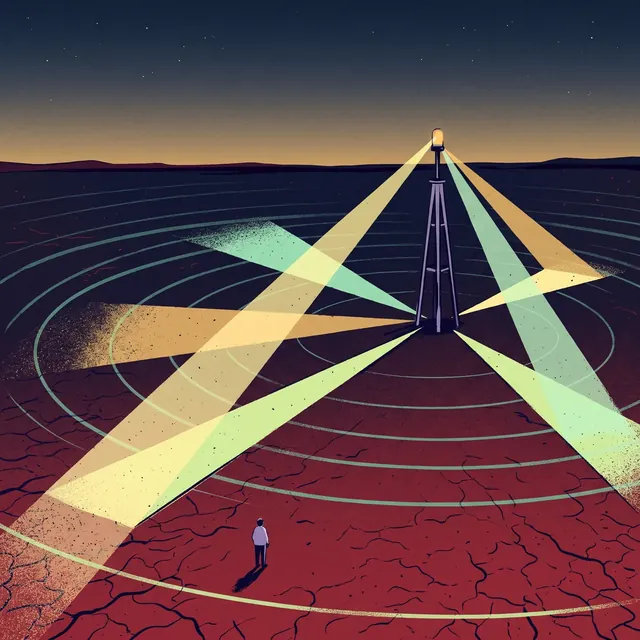
Interpreting complex systems may often depend on reading indirect signals rather than relying on direct observation. When physical access to a core process seems constrained, subtle surface outputs might offer a practical window into underlying structural mechanics. Monitoring distant or inaccessible environments could require observers to trust external traces rather than direct internal samples.
Wikipedia's current-events log for October 1, 2025 recorded that a research team at the Free University of Berlin announced the detection of new organic substances within water vapour plumes erupting from the surface of Enceladus.
Such observations might suggest that remote telemetry could reveal internal chemistry without forcing direct contact with hidden environments. For designers and builders, relying on secondary emissions might serve as a practical model for monitoring closed architectural layers. System diagnostic tools can often face similar constraints, where inner state changes might only be inferred through peripheral metrics rather than direct inspection. When internal processes generate external plumes, analyzing those traces may yield critical visibility.
Why Peripheral Signals Might Guide System Diagnostics
Specialized sensor architectures could perhaps show how structural frameworks might improve detection capabilities across volatile operational environments. When core activity cannot be directly interrogated, targeted capture mechanisms may provide essential diagnostic clarity. Engineering tailored collection layers could allow teams to sense minute chemical changes without disturbing the broader environment.
In general, evaluating complex systems might require balancing distant passive signals with highly tuned localized sensors. System architects who focus on reading peripheral indicators could develop more resilient diagnostic tools. By designing better monitoring interfaces, teams can potentially uncover critical structural shifts long before total system visibility becomes feasible.
System visibility might ultimately depend less on physical presence and more on the precision of the surface indicators being gathered.
Sources
- Portal:Current events/2025 October 1 (revision 1316277064) - Wikipedia, 2025-10-11