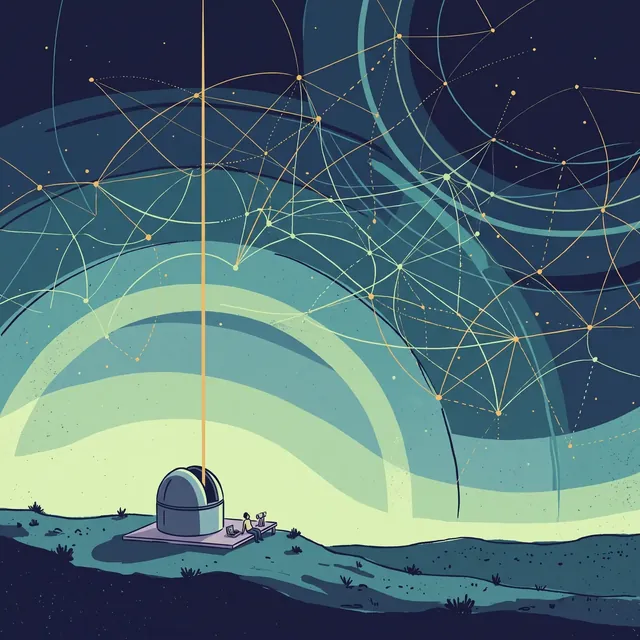
Wikipedia's current-events log for July 2, 2025 recorded that the Minor Planet Center confirmed an interstellar object was transiting the Solar System on a hyperbolic trajectory. The same log recorded that the object is likely a comet and could be as large as 12 miles (20 km) in diameter. Tracking such transient visitors might test the structural boundaries of existing observation tools. A rare visitor passing through a complex system might highlight how existing administrative or physical frameworks capture unexpected events. Such occurrences can perhaps serve as useful reminders that external inputs may arrive unexpectedly and demand high precision to observe accurately.
Why Physical Hardware May Reach Natural Limits
Detecting faint objects may rely on long-term refinements in observational science and technical methodologies. An abstract stated that scientists have been working to detect and characterize solar system bodies for two centuries. However, physical capacity alone may not always suffice when hardware approaches its functional ceiling. The abstract stated that physical limits of detectors and practical engineering limits of telescopes are being reached. When physical equipment encounters these natural operational constraints, operators might need to look toward software or mathematical refinements rather than relying strictly on hardware expansion.
How Algorithmic Integration Might Extend Reach
When single-pass observations fail to capture faint signals, structured data integration can potentially offer an alternative route forward. An abstract described shift-and-stack as the standard procedure for detecting moving objects fainter than the single-image detection threshold. Stacking sequential measurements across time might help operators uncover subtle signals that would otherwise remain hidden within background noise. This approach suggests that multi-frame processing can perhaps bridge the gap between hardware constraints and detection requirements.
In general, detection architectures may encounter inherent limits where scaling physical hardware yields diminishing operational returns. When sensors reach their physical boundaries, continued progress might depend primarily on algorithmic strategies and clever integration of existing data points. Systems engineered to track elusive events can perhaps build greater capability by emphasizing software analysis alongside physical measurement. Visibility into rare domain events may ultimately depend less on expanding hardware capacity and more on how effectively subtle signals are accumulated over time.
Sources
- Portal:Current events/2025 July 2 (revision 1299959674) - Wikipedia, 2025-07-11
- Abstract EPSC-DPS2025-989 - Copernicus Meetings, 2025-07-09