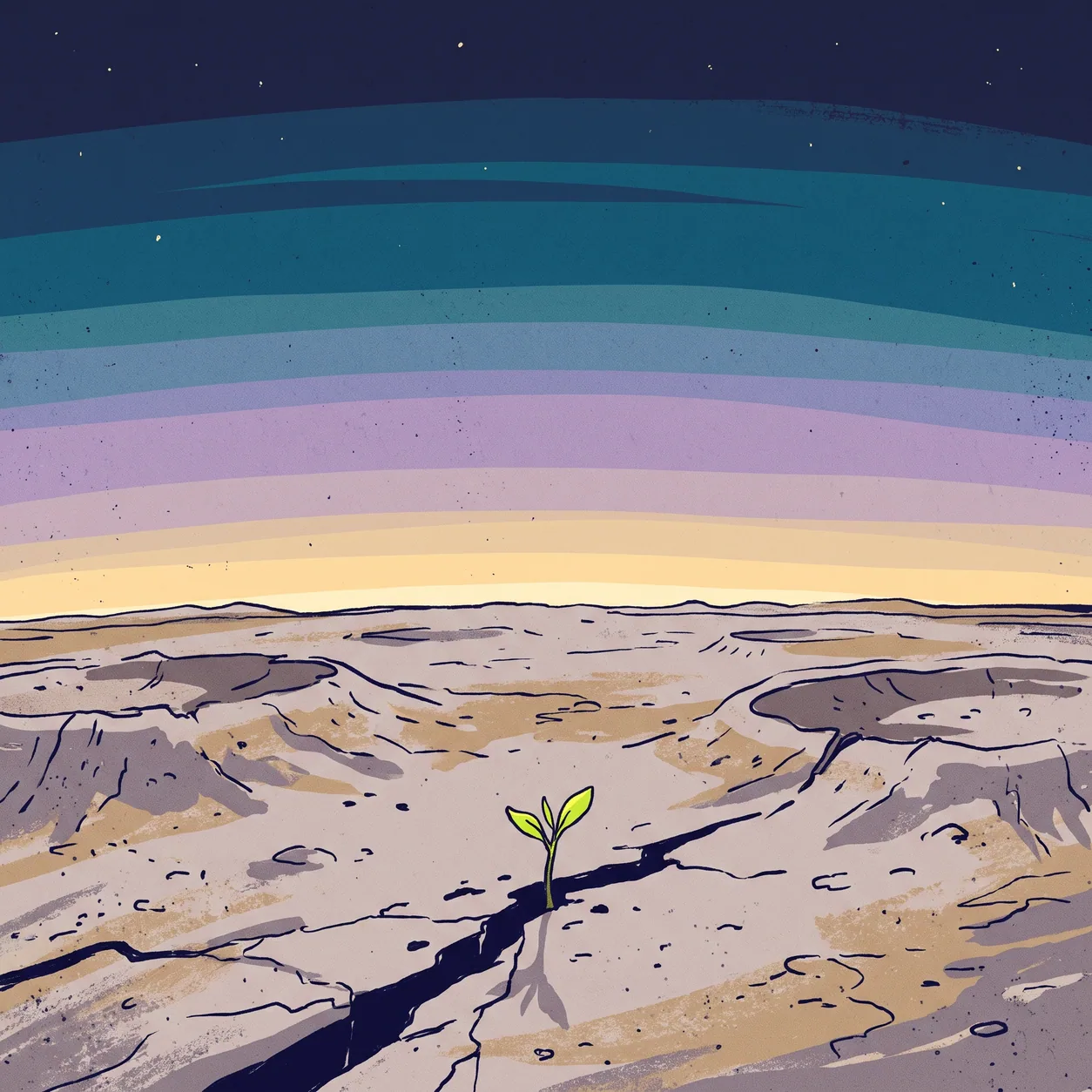
Building viable systems may often require testing core assumptions against uncompromising substrates. In new or uncertain domains, early progress might depend on whether basic seeds can find a foothold in material that was never designed to nurture them. Long-term viability can emerge when operators learn to evaluate how raw conditions affect initial development before attempting larger scale deployments.
Wikipedia's current-events log recorded that researchers from the University of Florida announced plants had been grown on lunar soil, collected by Apollo missions, for the first time ever. Eos reported that plants grown in lunar regolith collected by Apollo missions successfully grew from seed to sprout, lending insight into future lunar agriculture prospects.
Why Testing in Harsh Conditions Can Guide System Design
Proving that a delicate process can survive in an unfamiliar environment can alter how builders assess potential bottlenecks. Initial germination in harsh media might indicate that living systems possess surprising resilience when given minimal structural support. Rather than waiting for ideal conditions, teams could find that testing early prototypes in suboptimal settings provides critical signals about structural boundaries. Evaluating how foundational elements react under stress can help teams design more flexible frameworks.
Researchers can also explore ways to modify synthetic soils to evaluate growth possibilities across distinct scenarios. A study published in Frontiers in Nutrition aimed to enhance Martian and Lunar regolith fertility, testing two commercial simulants, through the provision of organic matter as manure. The study's authors obtained 8 different substrates after mixing Mojave Mars Simulant (MMS-1) or Lunar Highlands Simulant (LHS-1) with four different rates of manure. The authors then assessed how these manure-simulant substrates can modulate fresh yield, organic acid, carotenoid content, antioxidant activity, and phenolic profile of lettuce plants (Lactuca sativa).
What Seedlings Reveal About Unfriendly Environments
Sustained adaptation might rely less on recreating ideal default states and more on understanding specific environmental trade-offs. Observing how early life forms respond to unyielding material can highlight where structural adjustments are most needed. System designers might discover that even partial progress in restrictive environments can redefine what is considered feasible over time. Growth in harsh environments may depend less on perfect soil and more on steady adaptation to difficult terrain.
Sources
- Portal:Current events/2022 May 12 (revision 1088448167) - Wikipedia, 2022-05-18.
- Lunar Soil Can Grow Plants - Eos - Eos, 2022-05-13.
- Frontiers | Bioactive Compounds and Antioxidant Activity of Lettuce Grown in Different Mixtures of Monogastric-Based Manure With Lunar and Martian Soils | Nutrition - Frontiers in Nutrition, 2022-04-29.