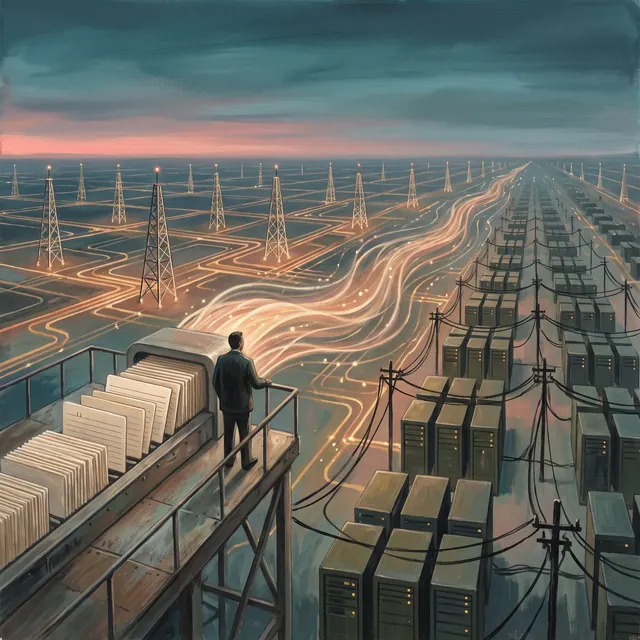
The transition from building a tool to using it marks a fundamental shift in any ambitious project. Massive infrastructure projects are not built to provide immediate answers. They are constructed to create the conditions where entirely new questions can be asked. Building a complex system requires immense precision, but the ultimate purpose of that system is often to probe the unknown.
Wikipedia's current events portal for September 10, 2008, recorded that CERN successfully circulated a beam through the entire Large Hadron Collider for the first time. CERN's press release said the first beam in the Large Hadron Collider at CERN was successfully steered around the full 27 kilometres.
Nature's Geoff Brumfiel caught up with physicists in CERN's cafeteria. LHC project leader Lyn Evans called it a "fantastic moment".
Shifting from engineering to exploration
Reaching the operational phase of a massive project shifts the focus from construction to observation. CERN Director General Robert Aymar stated, "The LHC is a discovery machine".
True technological ambition requires building platforms whose ultimate outputs remain unknown at the time of launch. The architecture of such a platform must be rigid enough to function flawlessly, yet open enough to capture unpredictable phenomena. The engineering feat of constructing a massive loop is distinct from the scientific work that follows. A completed system is simply a prerequisite for exploration. When a tool is designed to push the limits of observation, its initial activation is merely the baseline.
The true measure of a complex system is not whether it successfully powers on, but whether it expands the boundaries of what can be observed.
Sources
- Portal:Current events/2008 September 10 (revision 238002990) - Wikipedia, 2008-09-12
- First beam in the LHC - Accelerating science - CERN, 2008-09-10
- LHC: First beam goes round - Nature, 2008-09-10