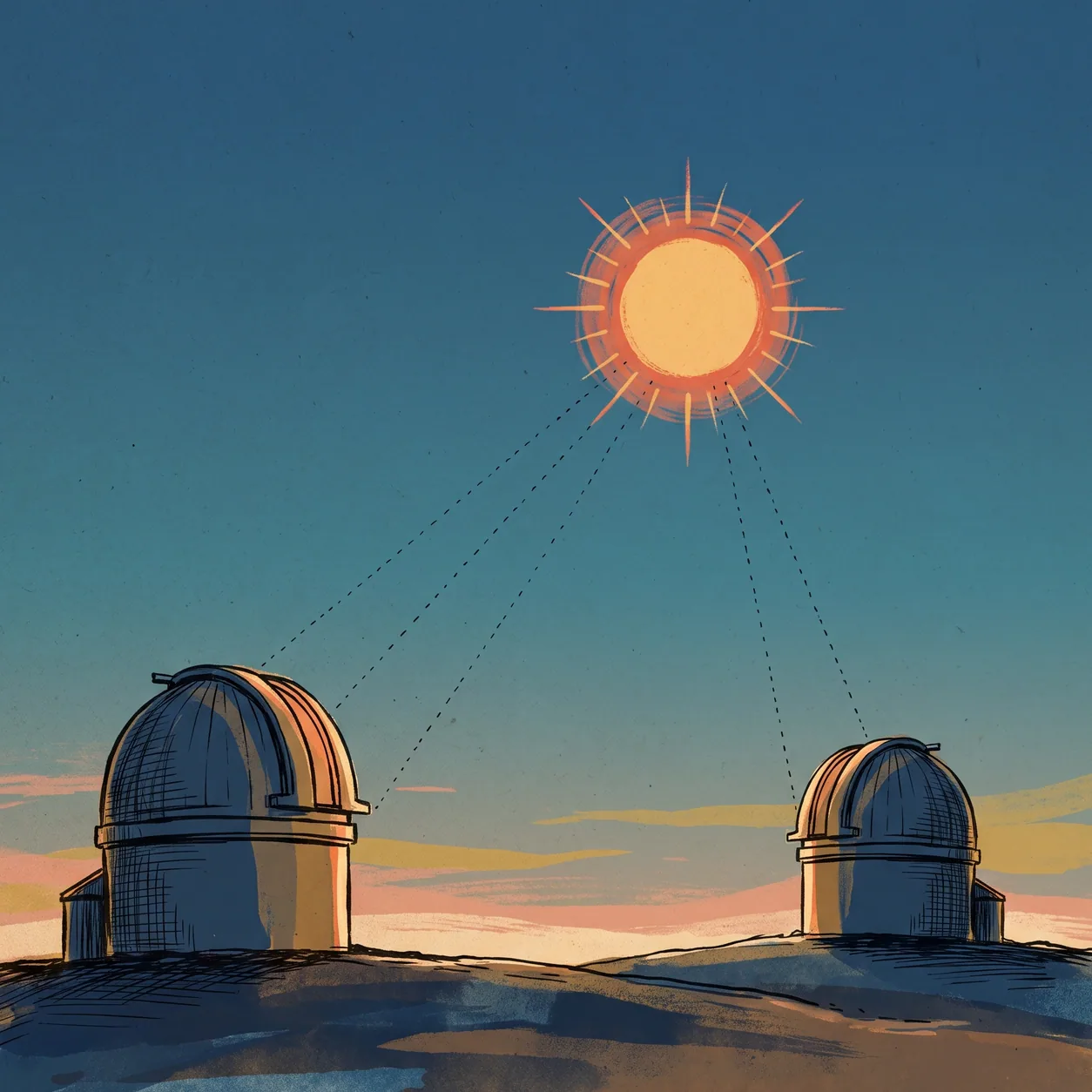
Foundational shifts in understanding often emerge from parallel, independent efforts rather than a solitary stroke of genius. When multiple groups pursue the same complex problem, their overlapping efforts can validate findings that might otherwise seem impossible.
BBC News reported that Saul Perlmutter and Adam Riess of the US and Brian Schmidt of Australia will divide a 10m Swedish krona prize.
The Architecture of Validation
In 1998, cosmology was shaken at its foundations as two research teams presented their findings. Perlmutter led the Supernova Cosmology Project beginning in 1988, and Prof Schmidt and Prof Riess began work in 1994 on a similar project.
Prof Perlmutter of the University of California, Berkeley, has been awarded half the 10m Swedish krona prize. The other half is to be shared equally between Brian Schmidt and Adam Riess.
According to the Nobel press release, the scientists found reassurance in the fact that both groups had reached the same astonishing conclusion. In general, separate teams working in parallel may act as a check on each other, and agreement between them could lend a finding credibility that one team alone might struggle to establish.
Competing Toward Consensus
Simultaneous work on similar projects often accelerates the pace of discovery. The presence of another group working toward the same goal introduces a competitive pressure that can refine methodologies and sharpen focus. It also creates a built-in audience of peers capable of scrutinizing the work at the highest level.
In fields that rely on observing vast, complex systems, isolated anomalies are often dismissed as errors. However, when separate groups observe the same anomaly, it forces a reevaluation of the underlying models. The friction between competing teams ultimately produces a more resilient consensus.
True breakthroughs require not just novel ideas, but the structural rigor of independent verification.
Sources
- BBC News - Nobel physics prize honours accelerating Universe find - BBC News, 2011-10-04
- The 2011 Nobel Prize in Physics - Press Release - Nobel Media AB, 2011-10-04