Radical new systems rarely launch themselves. They rely on established, brute-force infrastructure just to reach the starting line.
On March 25, 2006, a scramjet jet engine designed to fly at seven times sonic speed was successfully tested in Australia. ABC Science Online reported that a new scramjet engine, shaped like a bullet, would be tested in the Australian desert by an international team of scientists that hoped it would be more efficient than previous designs.
However, a scramjet cannot simply accelerate from a standstill. Earlier tests show how demanding this is: the HyShot project made two flights, on October 30, 2001 and July 30, 2002, and achieved supersonic combustion on the second flight.
New mechanics require old scaffolding
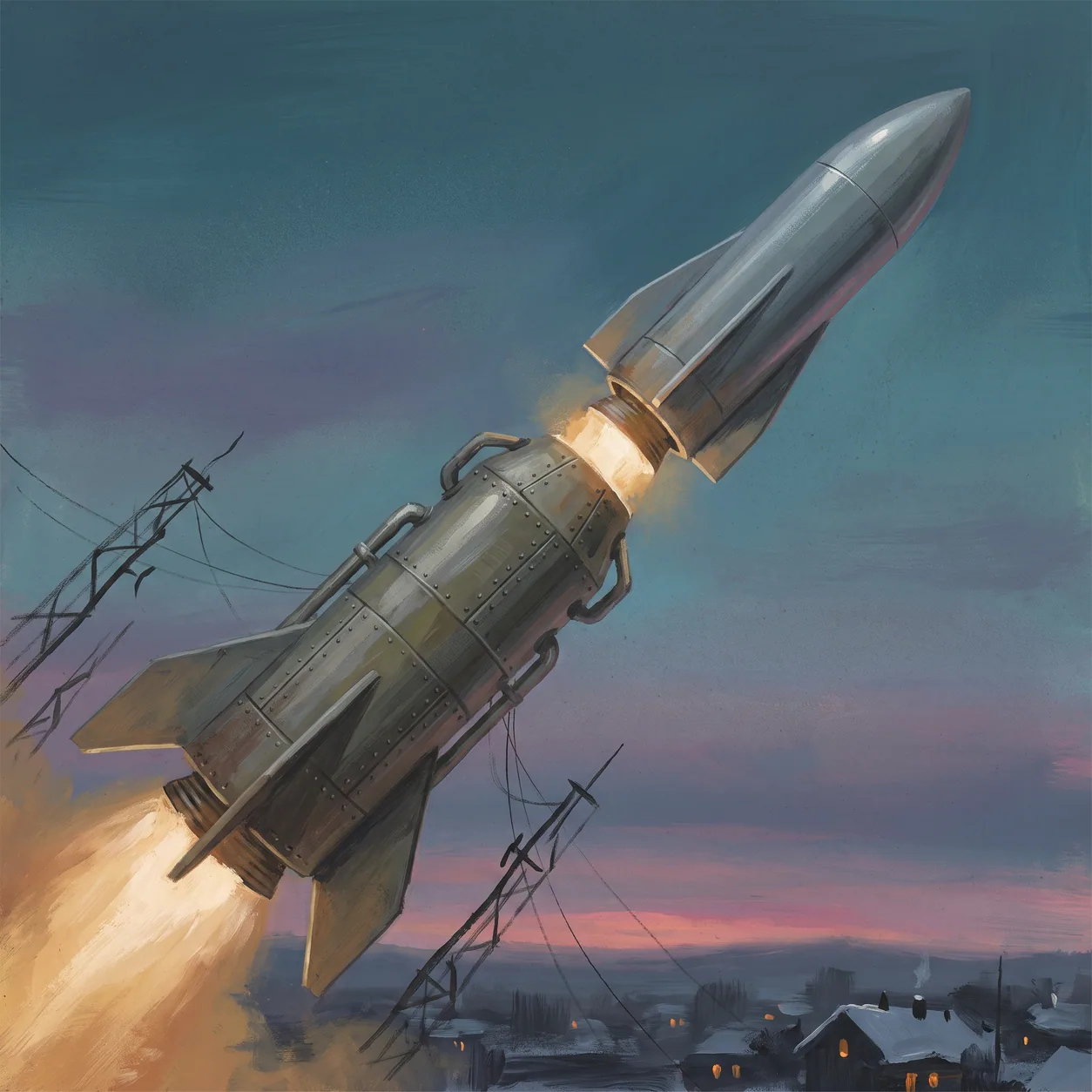
Testing this kind of propulsion still depends on the brute force of traditional rocketry. The HyShot program uses a two-stage Terrier-Orion Mk70 rocket to boost the payload. The trajectory is designed so that between 35km and 23km the payload is travelling at Mach 7.6.
The core innovation of the scramjet lies in its combustion efficiency at extreme speeds. Yet proving that efficiency requires an elaborate, older delivery mechanism just to create the necessary operating environment. The booster rocket does not make the scramjet itself better; it simply puts the experimental payload in a position where it can function at all. The new technology is entirely dependent on the old technology to reach its minimum operating threshold.
For builders of complex systems, the structural lesson is clear. The most advanced component of a project often cannot be tested or operated in isolation. Progress requires building or borrowing the heavy scaffolding needed to reach the necessary velocity, even if that scaffolding is eventually discarded once the test is complete.
Sources
- Portal:Current events/March 2006 (revision 46387345) - Wikipedia, 2006-03-31.
- ABC Science Online - News - Australian Broadcasting Corporation, 2006-03-25.
- HyShot Project - University of Queensland, 2006-02-03.