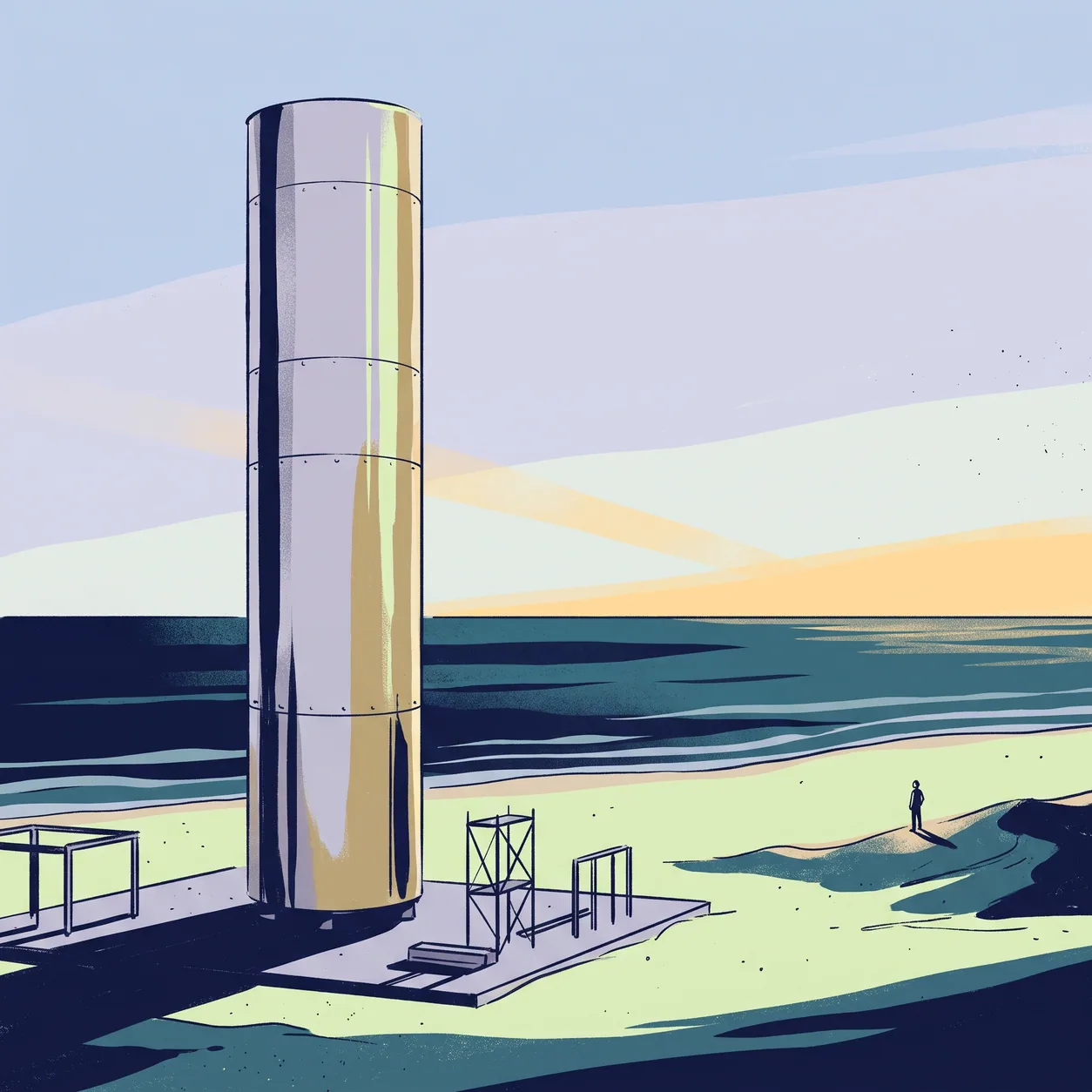
Developing ambitious physical infrastructure may require a willingness to accept incremental milestones. In high-stakes engineering projects, complex systems might only improve when teams validate theoretical models through aggressive real-world testing. Waiting for complete design perfection before gathering empirical data can introduce hidden vulnerabilities and delay overall progress. A commitment to physical prototyping might allow organizations to learn from unexpected behavior early in the lifecycle.
Space.com reported that the stainless-steel SN15 ("Serial No. 15") lifted off from SpaceX's Starbase test site, near the South Texas village of Boca Chica. Space.com added that SN15 soared about 6.2 miles (10 kilometers) into the sky. Space.com reported that SpaceX is developing Starship to take people and cargo to the moon, Mars and other distant destinations.
How Rapid Iteration Could Accelerate Engineering Breakthroughs
In complex development environments, isolated laboratory simulations may fail to capture real-world variables. Moving rapidly to empirical test flights might expose latent design flaws far earlier than software modeling alone can reveal. Every full-scale test cycle can offer valuable telemetry that refines subsequent iterations, potentially shortening overall development timelines. When feedback loops are short, engineering teams might discover novel solutions to intricate technical challenges faster than traditional linear workflows permit.
Engineering leaders could find that normalizing controlled operational tests fundamentally alters organizational risk tolerance. When technical teams frame early flights as experimental instruments for data gathering rather than definitive final products, partial failures might become constructive steps toward ultimate reliability. This perspective can foster an environment where calculated risks are seen as essential investments in system maturity.
By prioritizing active iteration over theoretical perfection, teams can systematically reduce technical uncertainty. Ultimate progress in complex hardware development may depend less on avoiding initial failures than on accelerating the speed at which systems learn from them.
Sources
- SpaceX launches Starship SN15 rocket and sticks the landing in high-altitude test flight | Space - Space.com, 2021-05-05