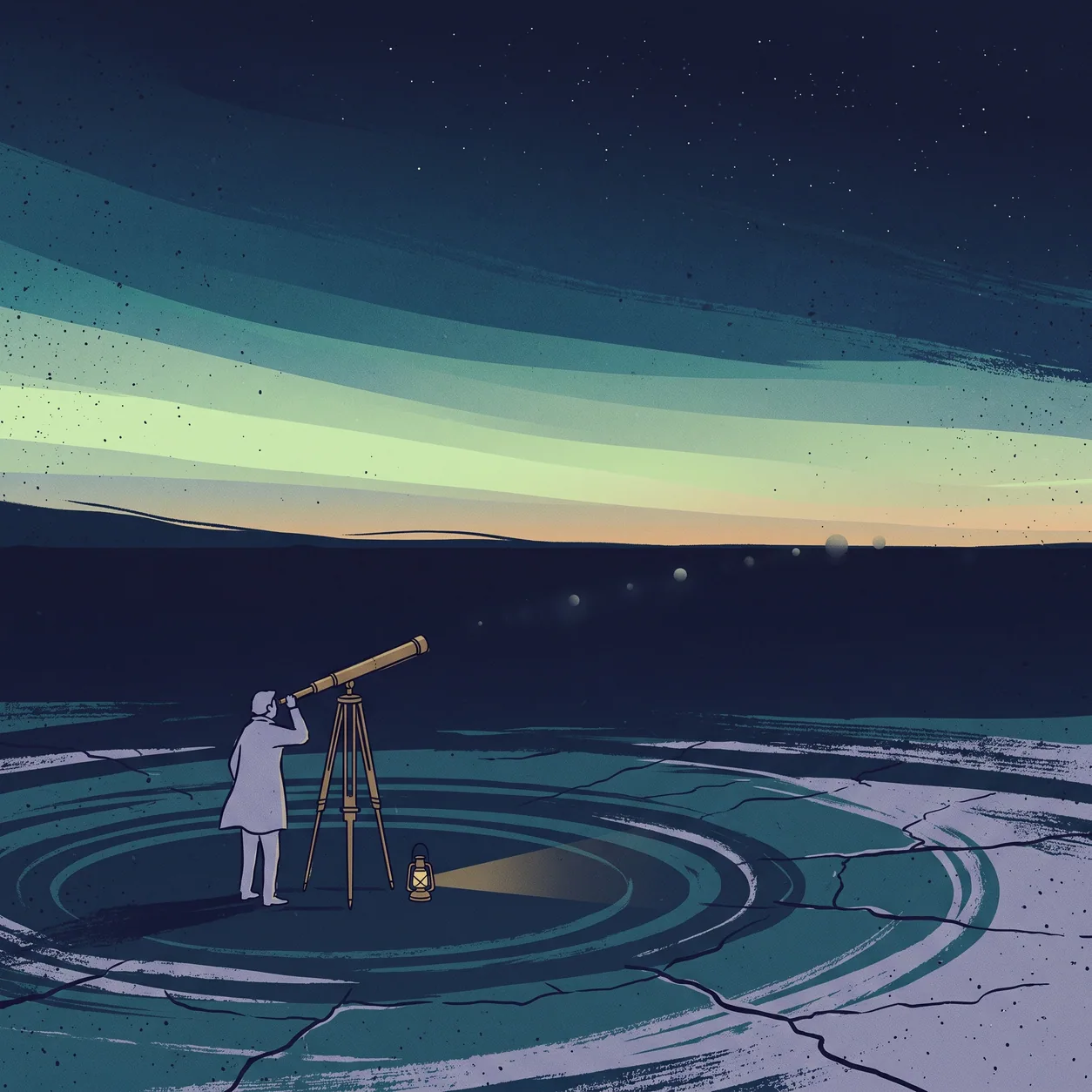
Significant discoveries might often depend less on dramatic bursts of activity and more on patient, prolonged scrutiny. Unassuming targets can carry profound structural complexity that remains hidden until observed over extended durations. In many fields, quiet or modest subjects may be routinely overlooked simply because they do not immediately produce loud, obvious signals.
The European Southern Observatory reported that astronomers found a system of seven Earth-sized planets just 40 light-years away. The New York Times reported that seven Earth-size planets that could potentially harbor life were identified orbiting a tiny star about 40 light-years, or 235 trillion miles, from Earth.
How Continuous Scrutiny May Change Our View of Dim Systems
Achieving this degree of clarity might require systems to commit dedicated instruments to monotonous tracking over long windows. Brief, intermittent snapshots could easily fail to register subtle patterns that accumulate only through sustained measurement. Organizations or analytical teams that focus exclusively on short-term results might consistently miss faint, underlying dynamics that require persistent monitoring to emerge.
The New York Times stated that Spitzer observed Trappist-1 nearly around the clock for 20 days, capturing 34 transits. The European Southern Observatory reported that TRAPPIST-1c, d and f receive similar amounts of energy to Venus, Earth and Mars, respectively. The European Southern Observatory reported that lead author Michaël Gillon of the STAR Institute at the University of Liège in Belgium was delighted by the findings.
Patience Can Be an Essential Tool for Mapping Unknown Frontiers
When observers scan complex environments too quickly, they might risk mistaking apparent stillness for a lack of meaningful activity. Concentrating deliberate attention on overlooked or low-profile areas could open entirely fresh possibilities for understanding intricate networks. A methodological commitment to long-term observation can transform seemingly empty spaces into rich fields of insight.
For builders and decision-makers alike, committing to continuous observation might reframe how quiet environments are evaluated and understood. What appears minor on the surface can sometimes contain an entire ecosystem waiting to be mapped through disciplined focus.
Sources
- Ultracool Dwarf and the Seven Planets | ESO - European Southern Observatory, 2017-02-22
- 7 Earth-Size Planets Orbit Dwarf Star, NASA and European Astronomers Say - The New York Times - The New York Times, 2017-02-22