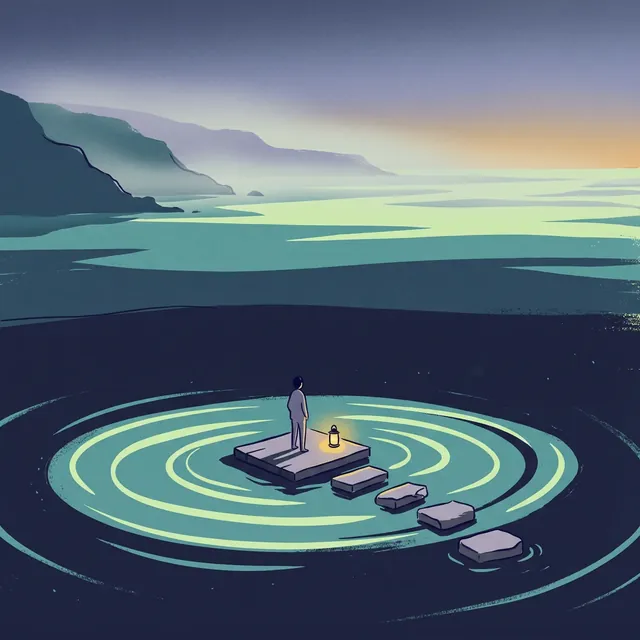
Navigating long-term operational boundaries can require building architecture capable of surviving far beyond initial timelines. When technical instruments push past familiar regions, the transitions they encounter might reveal surprising structural layers rather than simple binary cutoffs. Understanding how systems behave near outer edges can offer valuable lessons for managing unexpected operational environments.
Nature Astronomy reported that after 41 years of travel, the Voyager 2 spacecraft joins its twin in interstellar space. On 5 November 2018, Voyager 2 observed a sharp decrease in the intensity of low-energy ions.
What Boundary Crossings Might Teach System Architects
Such milestones can suggest that shifting across technical or physical regimes is rarely an immediate switch. Eos reported that Voyager 2 crossed the solar system’s edge at a different spot and in a different solar season than Voyager 1. Just beyond the heliopause Voyager 2 discovered a boundary layer, in which low-energy particles streamed outward along the magnetic field. The Nature Astronomy study of Voyager 2's cosmic ray measurements was supported by NASA under grant NNN12AA01C.
For engineers and system designers, these observations could illustrate how environments often change gradually rather than abruptly. Entering unfamiliar territory might introduce unexpected feedback loops or ambient conditions that test existing assumptions. When platforms cross key performance or scale boundaries, intermediate states can develop where older rules no longer apply in predictable ways. Planning for complex transition zones rather than assumed step functions may allow teams to maintain operational stability across unexpected boundary conditions.
Durable systems can thrive when built to gather diagnostic signal continuously through changing environments. When infrastructure continues functioning past original horizons, the data collected during transitions might prove as valuable as the destinations reached. Long-term durability may depend less on predicting every external variable and more on maintaining observation capabilities through dynamic boundary layers.
True architectural resilience might rely on preparing for the nuanced gradients encountered when crossing major thresholds.
Sources
- Voyager 2 enters interstellar space | Nature Astronomy - Nature Astronomy, 2019-11-04
- Cosmic ray measurements from Voyager 2 as it crossed into interstellar space | Nature Astronomy - Nature Astronomy, 2019-11-04
- Voyager 2’s Interstellar Arrival Was Kind of Familiar. That’s Surprising - Eos - Eos, 2019-11-04