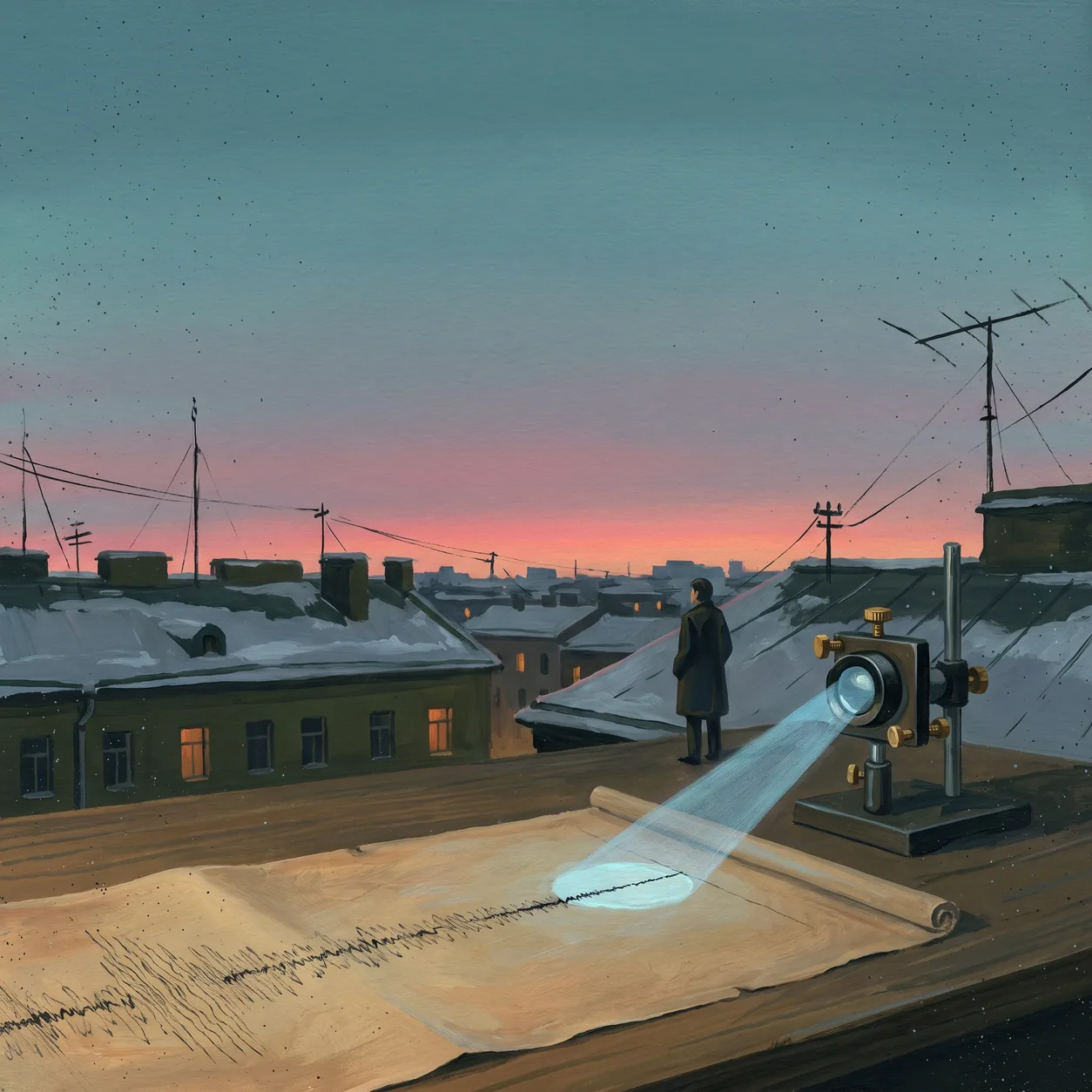
Data capture often precedes data utility. A system designed merely to record information can harbor value that remains inaccessible until entirely new tools are invented to decode it.
In March 2008, Wikipedia's current events log noted that American researchers replayed the oldest known recording of a human voice. The recording of the short song "Au Clair de la Lune" is thought to be the oldest known recorded human voice. It was captured on April 9, 1860, by a phonautograph, a device created by a Parisian inventor named Edouard-Leon Scott de Martinville.
The Separation of Capture and Playback
BBC News reported that the device etched representations of sound waves into paper covered in soot from a burning oil lamp.
To retrieve the sounds, scientists at the Lawrence Berkeley National Laboratory (LBNL) in California made very high-resolution digital scans of the paper.
Designing for Future Extraction
For people who design systems, a case like this suggests a general point. Keeping a careful record can be worth it even when no one can yet use it, because later tools may be able to read what earlier ones could not.
When building platforms, the initial focus often centers on immediate utility. Yet, separating the mechanism of data capture from the mechanism of data consumption allows a system to scale across technological eras. If the raw input is preserved accurately, future tools can unlock layers of utility that the original creators never anticipated.
The true value of a recording system lies not in how it plays back today, but in the fidelity of what it preserves for tomorrow.
Sources
- Portal:Current events/2008 March 27 (revision 202044928) - Wikipedia, 2008-03-30.
- Oldest recorded voice discovered - BBC News, 2008-03-28.