True structural change requires committing to a single path through an immovable obstacle. When builders confront a massive physical barrier, they cannot iterate their way through it; they must design a comprehensive solution and execute it over an extended timeline.
Wikipedia's current-events log for June 15, 2007, recorded that Switzerland opens the world's longest rail tunnel on land, the 34-kilometre Lötschberg tunnel under the Alps.
Absolute constraints demand rigid planning
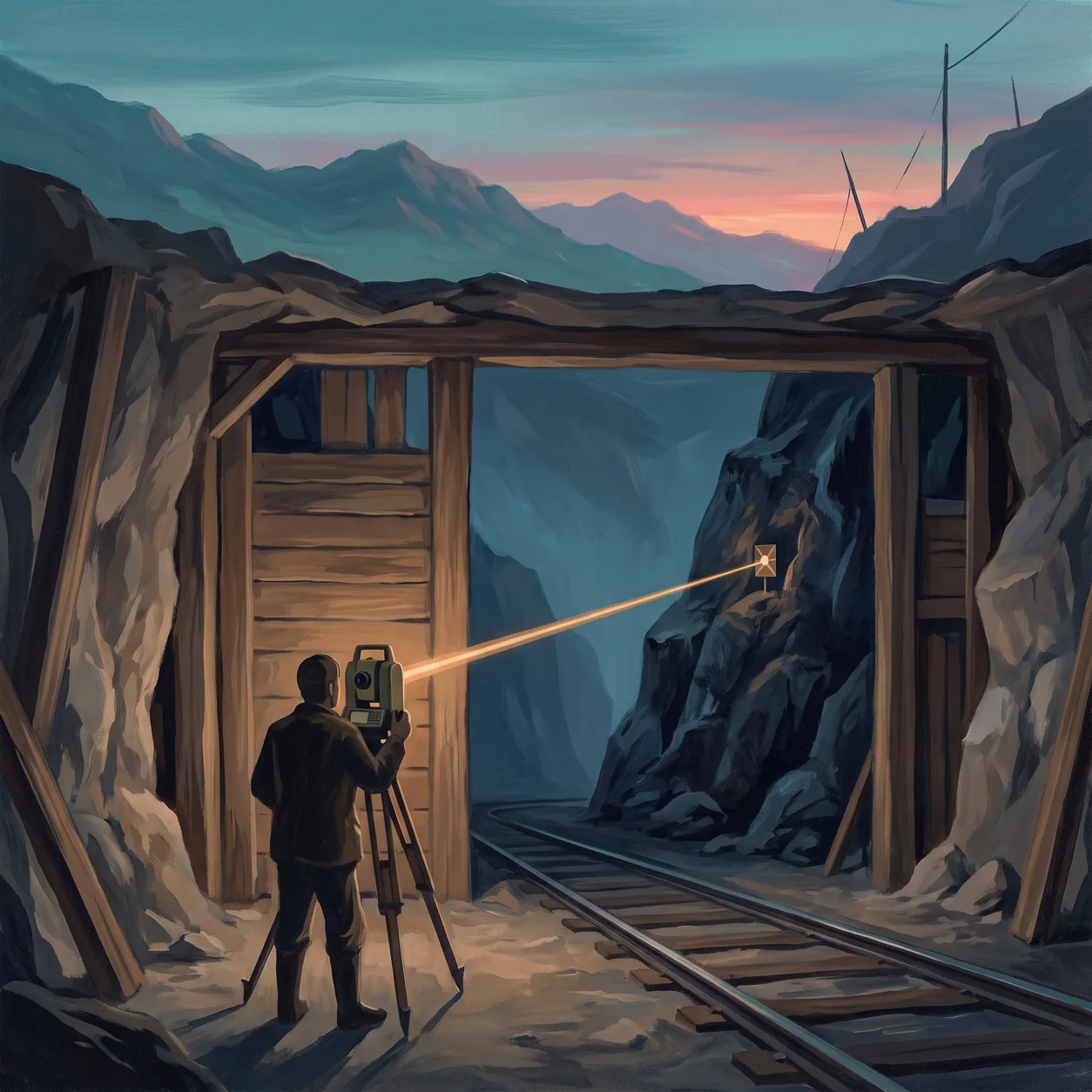
Building through a mountain range demands a different approach than flexible product design. The physical constraints are absolute. A subterranean passage cannot be partially deployed or easily adjusted once excavation begins. The commitment to the route, the engineering methods, and the scale of the effort must be locked in early. This rigidity is not a flaw in the process; it is a fundamental requirement of the medium.
When organizations face their own structural barriers, the instinct is often to seek workarounds or incremental improvements. However, some obstacles are simply too large to bypass. They require a direct, sustained effort that consumes significant resources before yielding any usable results. The discipline lies in maintaining focus on the final connection point, even when the daily work consists entirely of removing debris in the dark. Leaders must maintain alignment across teams for the duration of the effort, ensuring that the original vision remains intact despite inevitable friction.
Infrastructure requires systems thinking at scale
Connecting two regions separated by massive natural barriers changes the economic and social topology of the surrounding area. The value of such a project is not just in the structure itself, but in the broader network it enables. Planners must anticipate how movement and integration will function far into the future. The infrastructure must be designed for a system that does not yet exist at the time the first stone is moved.
Creating a massive new artery through an old barrier forces a complete recalculation of distance and time. The most significant breakthroughs often require abandoning the safety of incremental progress in favor of a massive, irreversible commitment to a single direction.
Sources
- Portal:Current events/2007 June 15 (revision 141448842) - Wikipedia, 2007-06-29