Building systems for extreme horizons might require accepting that the most meaningful boundaries can only be recognized when measurements shift subtly over time. A long-term project may operate quietly for decades before providing data that redefines basic assumptions. In general, enduring platforms could offer valuable insights long after their initial deployment phases have concluded.
Nature reported that Ed Stone, Voyager's project scientist at NASA's Jet Propulsion Laboratory in Pasadena, California, said Voyager 2 crossed the boundary of the heliosphere, the reach of the Sun’s influence, on 5 November. Scientists for Voyager 2 detected a steep drop in the speed of solar wind particles on November 5, and no solar wind flow.
How Persistent Measurement Could Outlast Initial Constraints
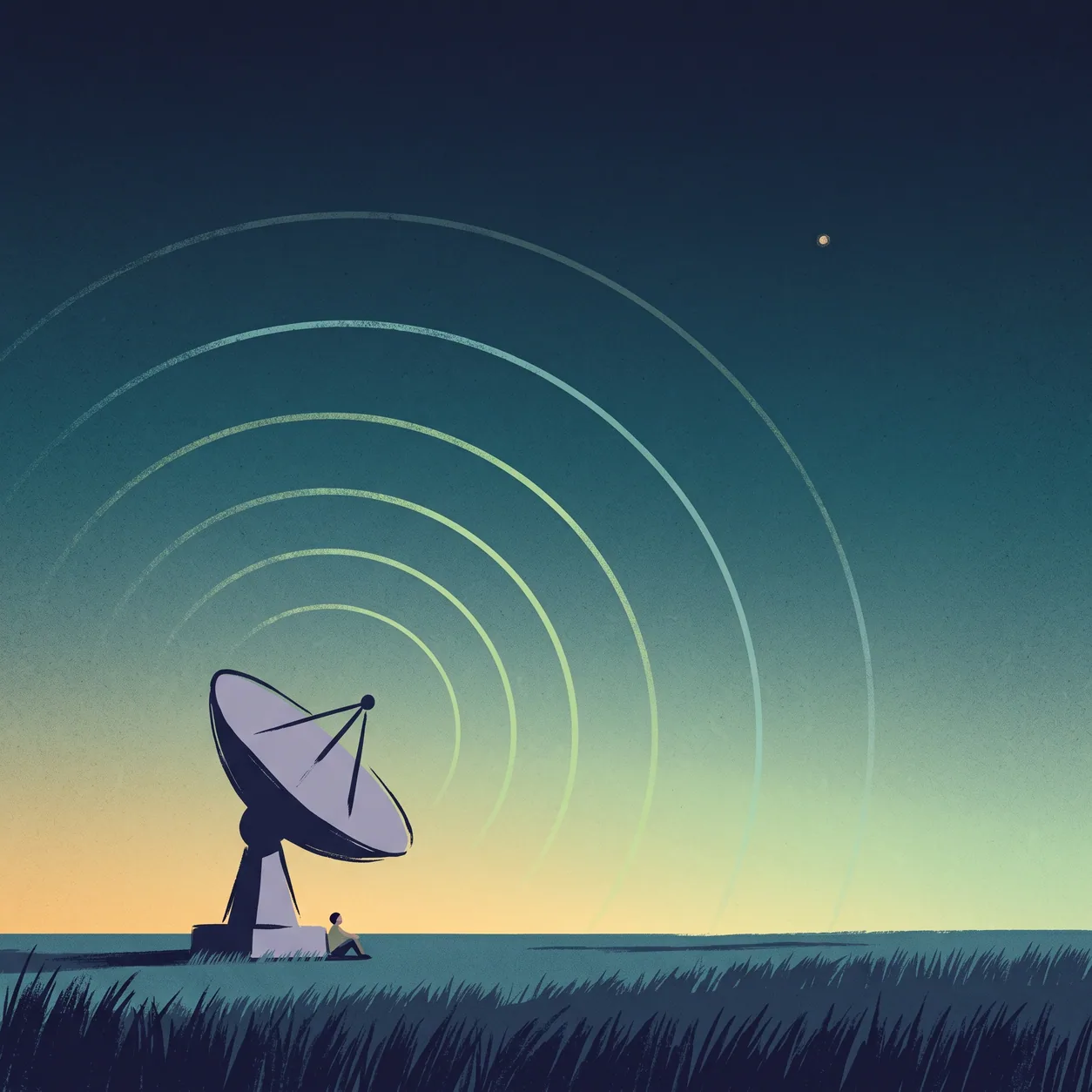
Nature reported that NASA’s Voyager 2 spacecraft has crossed into interstellar space, joining its twin, Voyager 1, which made the epochal passage in 2012. An article reported that the slightly faster Voyager 1 entered interstellar space in August 2012. Nature stated that Voyager 1 is 21.6 billion kilometres from the Sun, while Voyager 2 is 18 billion kilometres from the Sun. An article reported that Voyager 2 is about 18 billion kilometres from Earth and still sending back data that are picked up by radio telescopes in Australia.
Why Sustained Telemetry Might Matter for Product Architecture
For system architects and product designers, complex tools can often seem bounded by immediate goals. Yet, maintaining continuous observational capabilities might allow an architecture to record crucial shifts far beyond its original expectations. An instrument that continues sending signals across vast distances can arguably demonstrate how robust design principles preserve utility over decades.
In general, long-horizon endeavors might remind technical teams that patience can be a core element of execution. Designing for durability may ensure that when unexpected operational conditions occur, the infrastructure remains ready to capture new information. Perhaps the true strength of a complex system lies in its capacity to remain functional when crossing unfamiliar thresholds.
True longevity in system design might ultimately depend on the capacity to keep listening long after familiar territory is left behind.
Sources
- Voyager 2 enters interstellar space after 41 years - Nature, 2018-12-10
- Australia is still listening to Voyager 2 as NASA confirms the probe is now in interstellar space - The Conversation, 2018-12-10