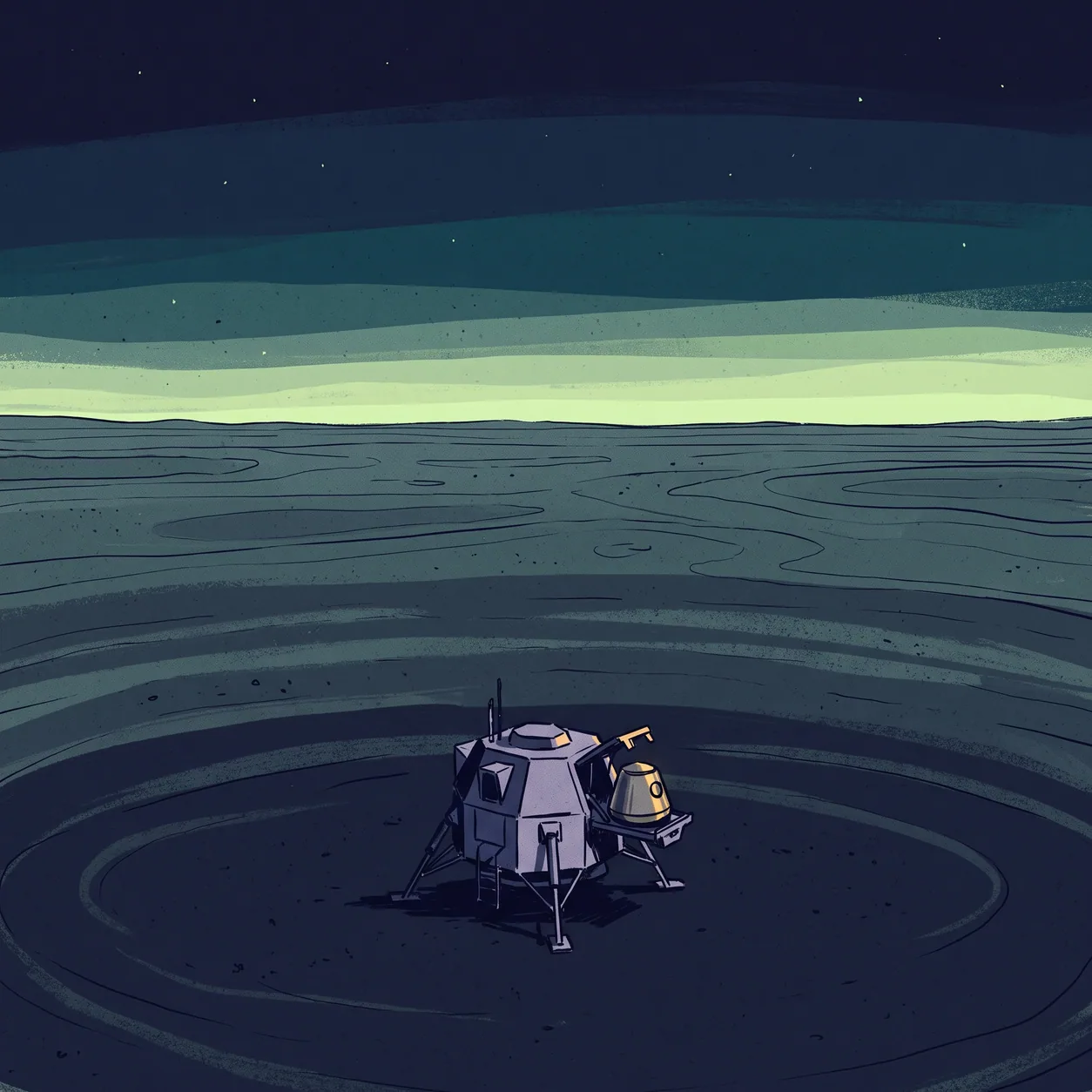
Automation systems can often rely on remote observations, but gathering physical material from an unmapped or complex environment might offer distinct operational insights. Moving beyond distant sensing toward direct physical collection may require higher levels of operational autonomy, systemic coordination, and fault-tolerant architecture. When operators aim to retrieve physical assets, every phase of execution can carry compounding risks that distant sensors might rarely encounter.
Wikipedia's current-events log for November 23, 2020 recorded that the China National Space Administration successfully launched the Chang'e 5 robotic spacecraft from the Wenchang Spacecraft Launch Site. Wikipedia's current-events log recorded that Chang'e 5 is China's first sample return mission. Wikipedia's current-events log recorded that Chang'e-5 will bring back at least 2 kilograms of lunar soil.
Executing a physical retrieval mission can highlight the distinction between observing a target and interacting with it directly. Remote monitoring might provide continuous streams of observational data, but bringing tangible physical artifacts back to a home base can offer precise physical ground truths that telemetry alone might not replicate. Systems designed for active collection rather than simple observation could demand far greater operational resilience, as every stage of the lifecycle might need to function in exact sequence to preserve a payload. When physical assets are at stake, secondary contingency plans can become just as critical as primary mission protocols.
How Remote Retrieval May Expand System Capabilities
For builders of complex automated workflows, focusing on direct material capture can shift design priorities from broad data gathering to precise execution. Software and robotic systems designed to extract physical samples might require tighter feedback loops and broader safety margins, since failure at any single point could prevent the return of valuable resources. A focus on tangible returns can force engineering teams to account for unpredicted external factors and environmental edge cases in challenging operating conditions. In automated systems generally, physical return requirements can compel developers to prioritize durability over novelty.
Why Material Collection Might Matter for Future Operations
In general, shifting from passive observation to physical capture may alter how engineering organizations evaluate project scope, success metrics, and risk management. Pursuing physical artifacts can push operational boundaries beyond simple telemetry into complete end-to-end execution. System designers might find that returning physical materials creates a clearer feedback loop for validating remote operations than digital telemetry alone. Ultimately, the true value of remote automation might lie not merely in viewing distant frontiers, but in bringing back concrete assets.
Sources
- Portal:Current events/2020 November 23 (revision 991399466) - Wikipedia, 2020-11-29